
Many women still struggle to be heard about their health. In October, our Safe Space, Safe Mind community took on the question directly. Here is what women told us
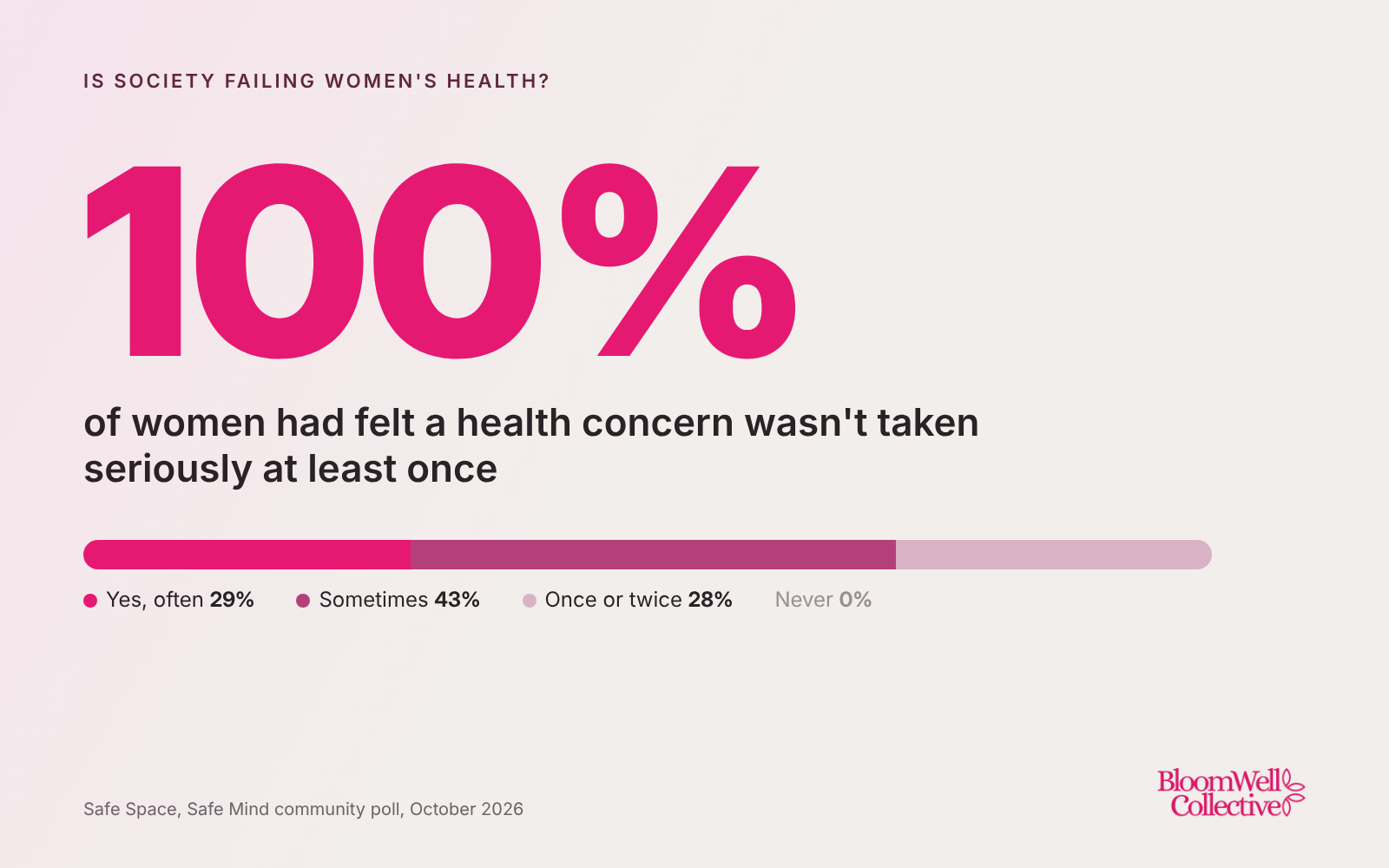
Every woman who answered had felt a health concern wasn’t taken seriously at least once. Not one said never, and almost a third said it happens often.
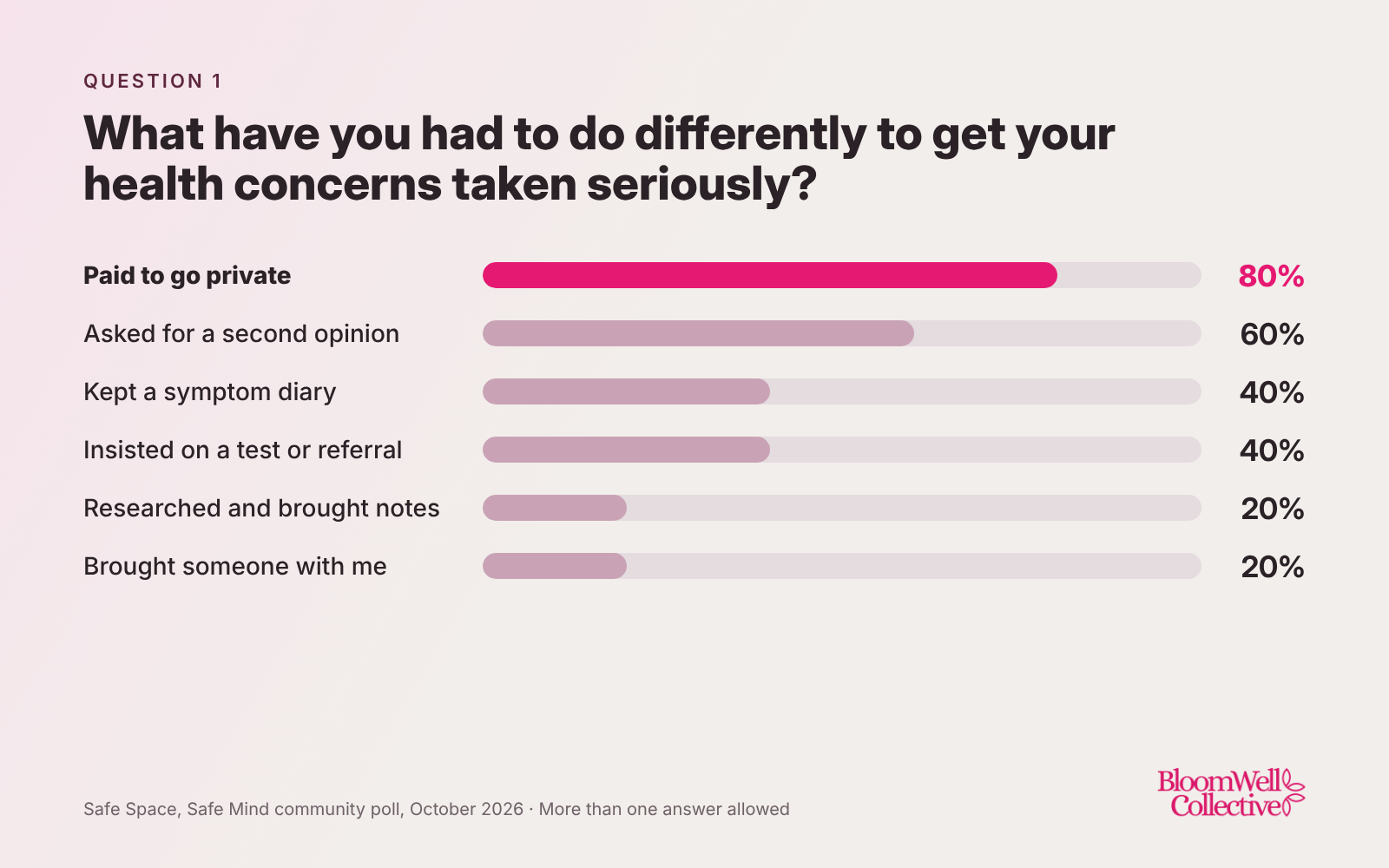
Being heard often costs money. Eight in ten women had paid to go private, and six in ten had asked for a second opinion. Many kept a symptom diary or insisted on a test or referral.
Women said they had to look more distressed than they felt before anyone acted, because staying calm seemed to get them overlooked. Some said it is harder still for women from ethnic minority backgrounds.
That’s a lot of work just to be listened to, and not every woman can afford to go private.
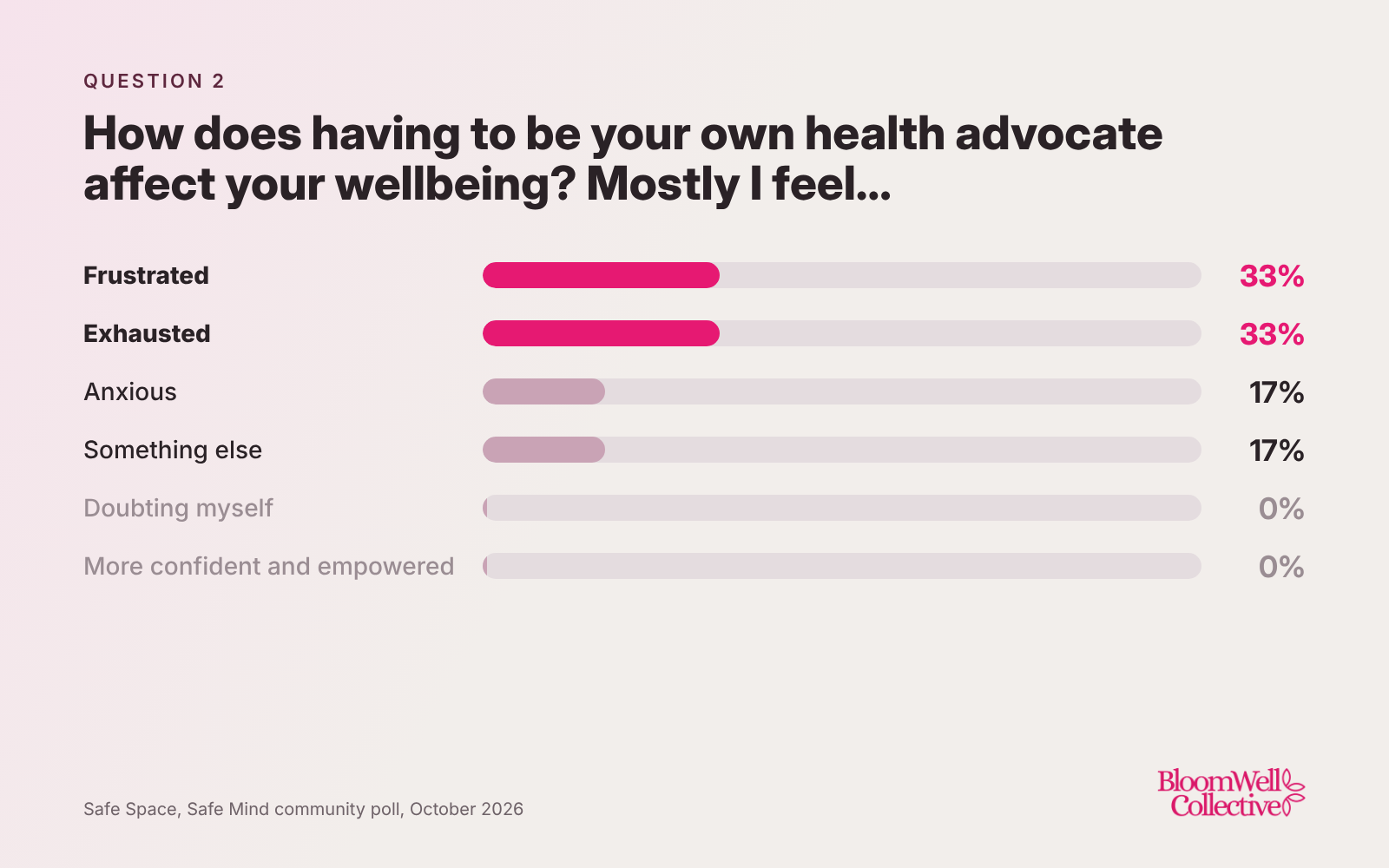
Frustrated and exhausted came out on top. Nobody chose “more confident and empowered.”
That answer matters. Speaking up for yourself is often described as empowering, but for these women it mostly felt like another job. Some conditions, like fibroids, endometriosis and heavy bleeding, are so often treated as normal that women carry them for years.
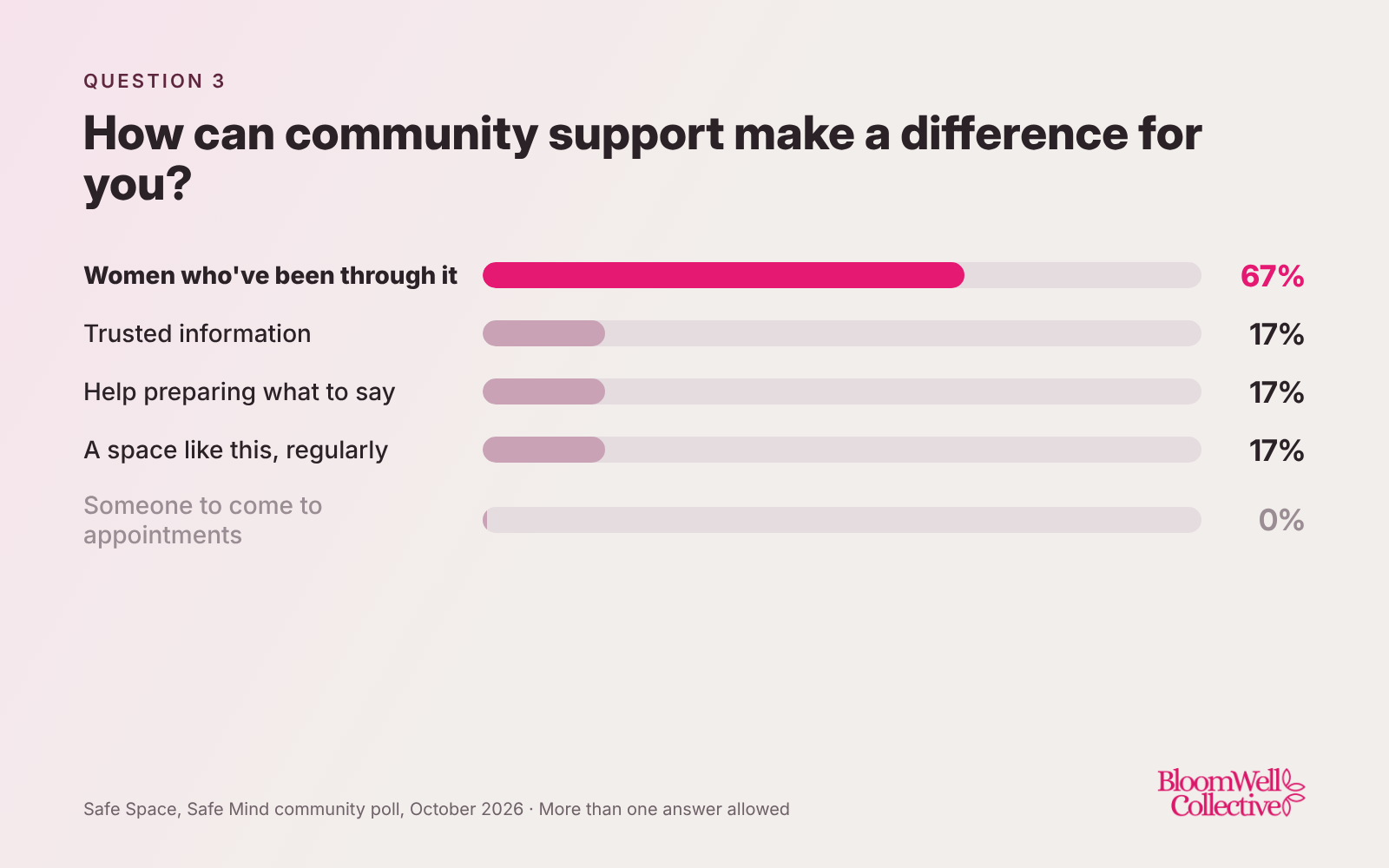
Two in three said what would help most is women who’ve been through it. Hearing from someone who has had the same procedure or lived with the same condition helps you prepare and feel less alone. Sometimes being heard and believed is enough.
What women told us
You have to look distressed to be believed. Women said staying calm got them overlooked.
It’s harder still for some women. Women from ethnic minority backgrounds described extra barriers to having their symptoms recognised.
The evidence has gaps. Medical research and drug trials have mostly relied on men, leaving gaps in how women’s symptoms are understood.
Speaking up drives change. The more women talk openly, the harder these gaps are to ignore.
What women say helps
Keep a symptom diary. Write down what happens, how often and how bad it is.
Take someone with you. A trusted friend can speak up when you can’t.
Ask for a second opinion if something still feels wrong.
Use reliable sources and bring your questions with you.
Talk about it. Someone else may recognise her own story in yours.
These tips come from lived experience and aren’t medical advice.
So, is society failing women’s health?
Women are doing a lot of work just to be heard. We may have to fight to be heard, but we don’t have to do it alone.
Join the conversation
Find our next free Safe Space, Safe Mind conversation on our Events page, or join BloomWell Circle to hear about it first. If anything here felt close to home, our Get Support page is there for you.
